
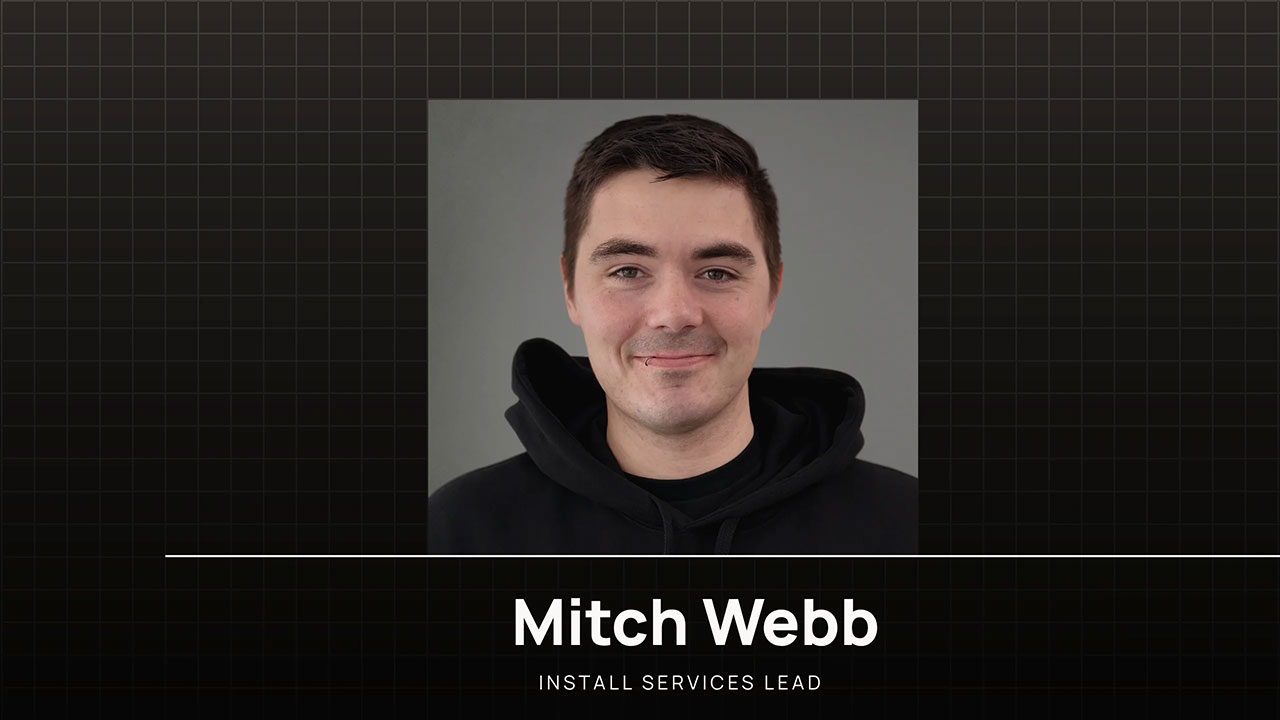
Since 2019, Mitch Webb has worked at Foundry Kitchens and brings over a decade of experience in commercial kitchen installation. As Install Services Lead, he manages Foundry’s install team while coordinating with project managers, the shop, equipment delivery, trades, and contractors to keep projects moving smoothly from planning through installation. With years of hands-on experience and a strong instinct for coordination, he brings a practical, problem-solving mindset to every job.
Below, Mitch talks about how he got into the industry, what he enjoys most about the work, and why early coordination is so important on commercial kitchen projects.
Commercial kitchen installation is a pretty specialized field. How did you find your way into it?
“I kind of fell into it. I helped a friend carry a piano up some stairs about 14 years ago, and his friend owned a company in Calgary that did commercial kitchen installs. He needed help the next week getting some Exhaust hoods up some stairs, so I said I’d give him a hand. It just turned into a full-time job from there.”
What does your role at Foundry involve day to day?
“I manage our install team, which is six installers plus myself. My day-to-day is scheduling our installers, making sure they have what they need, coordinating with our project managers, fabrication team, equipment delivery team guys, dealing with contractors, trades & consultants. I also quote our installs, work with the estimation, design teams on different parts of our projects, and of course complete site measures/ installs when needed.”
What do you enjoy most about this kind of work?
“Probably problem-solving and the hands on work. I enjoy a good challenge, it would be kind of boring if we weren’t trying to figure out new problems all the time.”
What’s one thing people outside the industry often don’t realize about commercial kitchen projects?
“It’s kind of its own little world. If you haven’t done a commercial kitchen before, there are a lot of things that don’t really translate over from other types of construction. It still comes down to the same fundamentals like planning, executing, reviewing drawings, site conditions, but it’s specialized in many ways.”
What details do you pay attention to early that can save time or trouble later?
“That’s kind of our big thing. In my previous experience, installers would just show up on site to install and deal with a ton of unnecessary problems that hadn’t been caught or coordinated beforehand. Now we can get to the site early and work with engineers, trades, the GC, and our own team to catch issues with services, access, and sequencing before they become bigger problems. We are also looking at how everything will function in real use and how it will hold up over time for the end user.”
How does Foundry’s integrated setup affect the way you work?
“It makes a big difference because we’re involved earlier. We can review internally with each department. This allows us to keep things efficient and avoid delays or rework. I think that’s one reason people like working with us. They know we’re going to help sort things out before they become a problem, and we have a solid team to back us when new issues do arise.”
What’s one kitchen tool you can’t live without?
“One of my favourite kitchen tools is a Makita drill. I use it as a whisk for mashed potatoes, whipped cream, and anything else that needs a good mix.”