
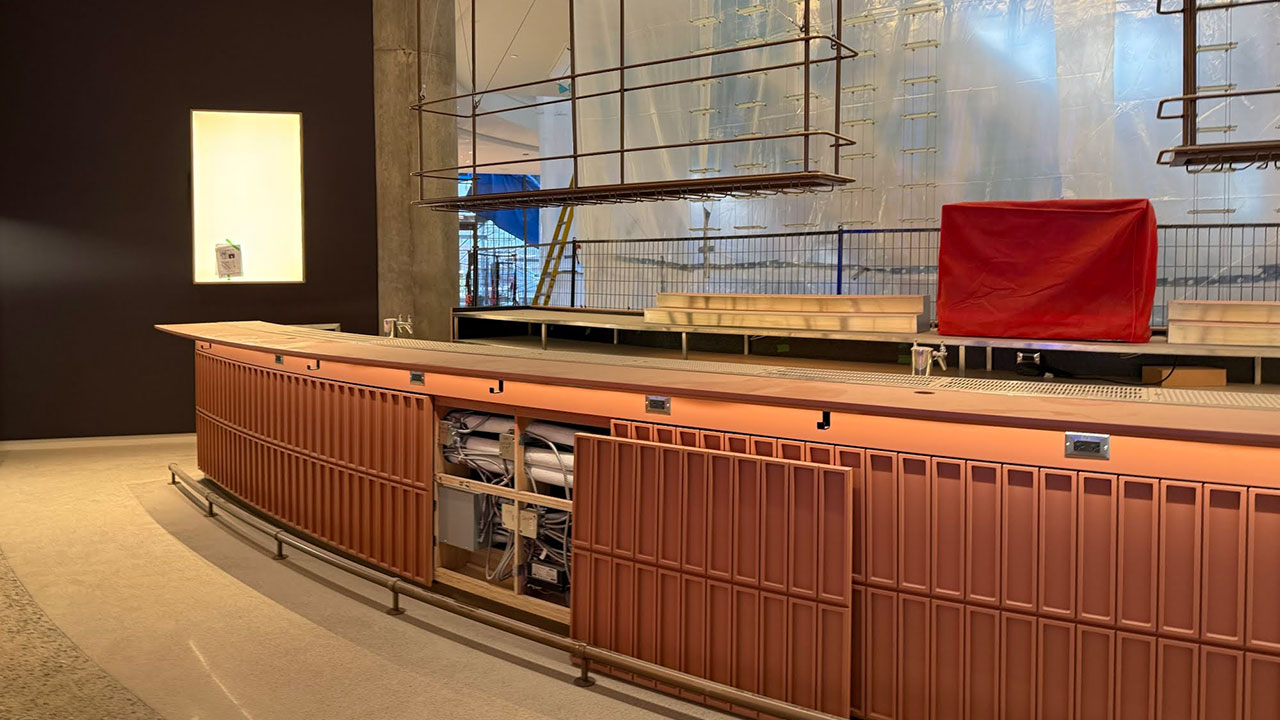
Time Out Market brings Vancouver’s culinary talent to one destination. Opened in May 2026 at Oakridge Park, it anchors a major redevelopment that blends retail, housing, parks, and culture. Inside, the space features 18 independent kiosks, three bars, a coffee concept, and essential back-of-house support, all delivered within an active construction environment.
Foundry supported the kitchen package across the full footprint, supplying and installing commercial kitchen equipment for each vendor’s kitchen, the bar and coffee zones, and back-of-house areas. The team also fabricated custom stainless solutions tailored to each concept’s needs and supplied the exhaust hood systems. With phased installations and tight tolerances, the work depended on steady coordination and disciplined sequencing to keep the kitchen scope moving in step with the broader build.
For the general construction team at ETRO Construction, the kitchen scope extended beyond one room. It behaved like 18 small projects running in parallel, with tight sequencing, high visibility, and a low tolerance for rework. The schedule was only part of the pressure. With multiple food concepts opening under one roof, every detail had to come together cleanly, from coordination to final fit and finish.
Foundry’s involvement started before install. ETRO brought the Foundry team in to help value-engineer the kitchen package, identifying cost-saving alternatives that would still meet the performance and finish requirements of the project. A key part of that work was identifying specifications that could be replaced with more locally supported options, reducing procurement risk on a project with a large budget and a long timeline.
Jason Gilron, Foundry’s president, said on projects like this, the job is to make the kitchen scope buildable. “We’re structured a lot like a good contractor. Hands-on, responsive, and close to the work. We confirm what’s missing, align the packages by area, verify field conditions before fabrication, and keep decisions moving so installs don’t stall.”
Project snapshot
“The shop drawing process set us up for success.”
– Cat Donlevy, Foundry Project Manager
- Project: Time Out Market, a food hall with 18 kiosks + three bars + coffee
- Location: Oakridge Mall, BC
- GC / build partner: ETRO Construction
- Designer: Cini-Little International, Inc. (Toronto)
- Foundry scope: Equipment supply + custom stainless fabrication/supply + installation support + delivery sequencing + on-site troubleshooting
- Key Highlight: Extremely large scope project, requiring high-density multi-zone coordination; changing site access/logistics; some long-lead equipment deliveries
- Outcome: Foundry’s scope fully delivered; project is 100% complete. The project lasted two years and three months.
What made this project high-stakes
This was a high-density scope with 18 separate kiosk packages and three bar zones, all operating under the same access constraints and trade sequence. Foundry managed it as multiple scopes running in parallel, not a single kitchen installation. On a project this large, cost control and procurement risk sit right alongside sequencing and install detail.
- Sequencing pressure: Multiple zones moving at once (kiosks + bars + BOH), with constant trade stacking and access coordination.
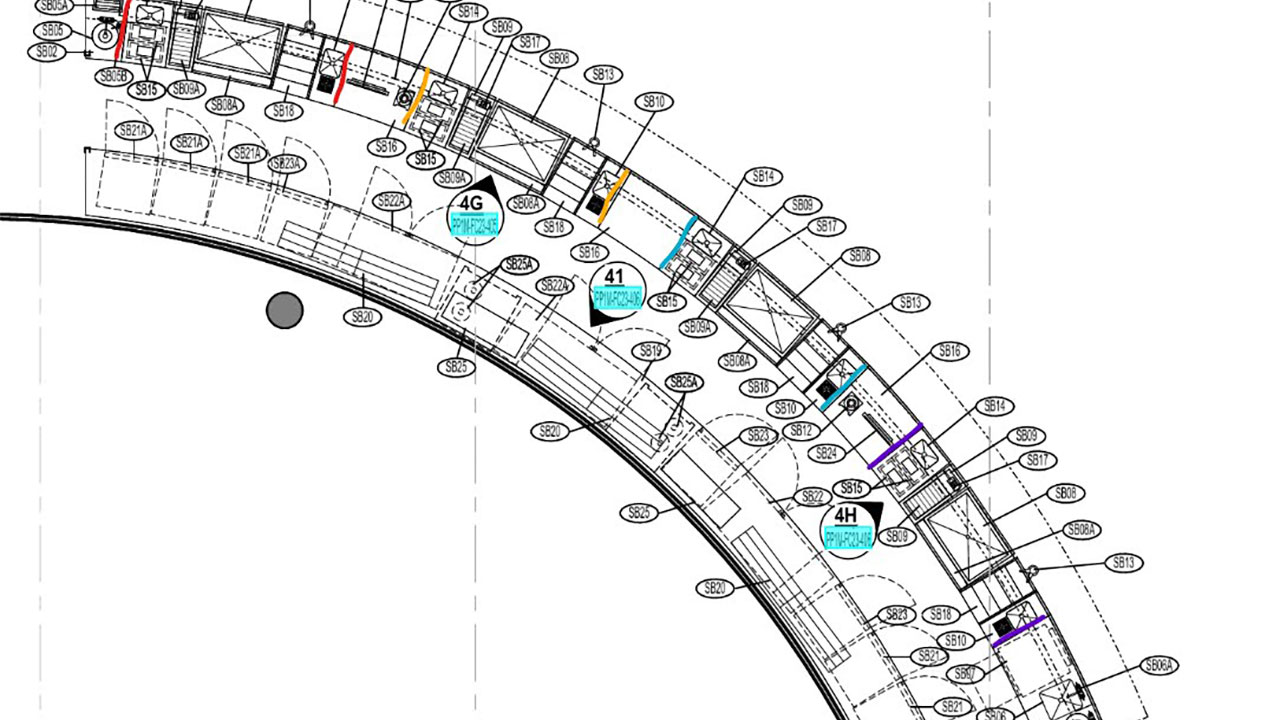
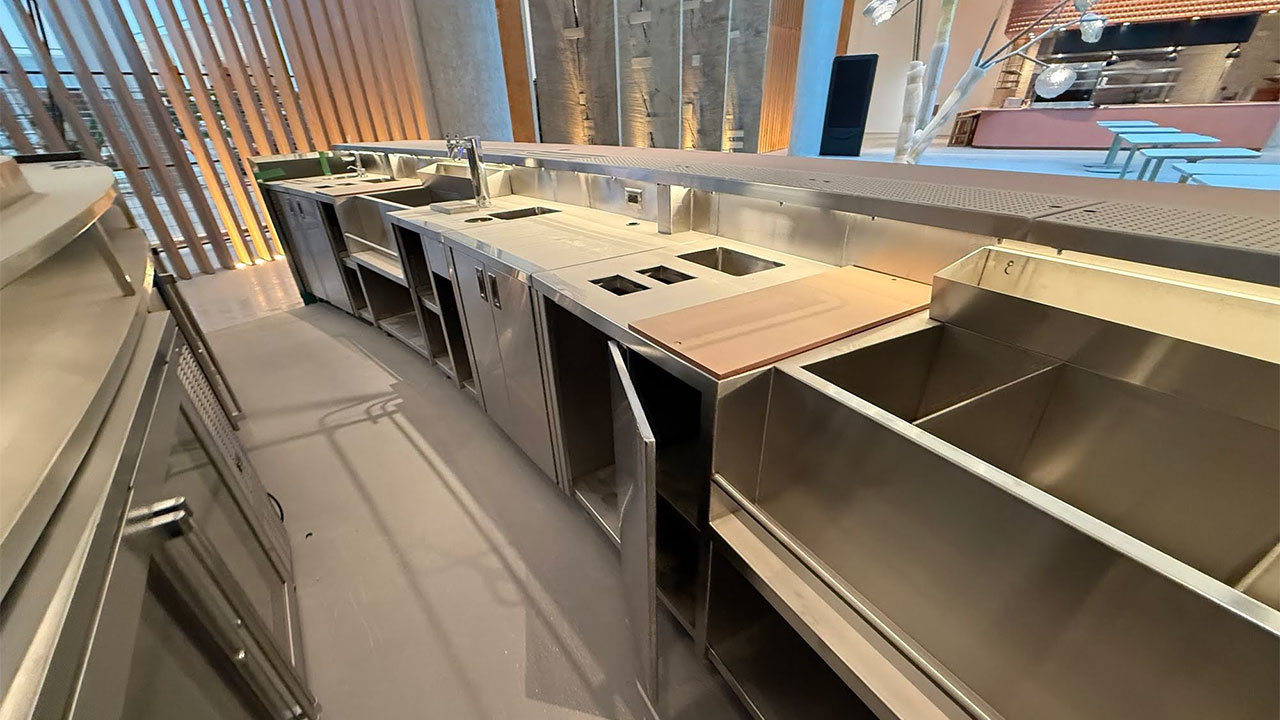
- Custom fabrication exposure: Curved bar work, integrated liquor rails/lighting, specialty counters and service elements.
- Logistics constraints: Access and delivery sequencing shifted as the site evolved.
- Long-lead dependencies: Some equipment arrived later than planned, requiring re-sequencing and closeout planning.
- Global visibility: Time Out Market is an internationally recognized concept, so missteps can travel beyond the site.
Pressure points
“Being local, with our own custom stainless shop, made a big difference.”
– Cat Donlevy, Foundry Project Manager
On a project this large, the risk is usually in the details. With 18 kitchen kiosks, one small change can affect drawings, equipment, services, fabrication, delivery, and installation. If those pieces are not managed closely, the general contractor can end up chasing kitchen issues instead of keeping the broader site moving.
To address this, the Foundry project team made the shop drawing phase a core risk-control step. Rather than submitting drawings as a single package, Foundry organized submittals by kiosk, enabling each area to have dedicated, clear drawings and specifications. This six-month review focused on thorough planning, keeping information precise before fabrication and installation began.
As Foundry’s then-project manager, Cat Donlevy put it, “The extensive shop drawing process set us up for success.” She also noted that splitting submissions by kiosk meant “we (installers and site trades) had everything at our fingertips during execution.”
For the general contractor, this meant everyone was aligned earlier, with fewer surprises later as fabrication and installation happened across several areas at once.
As the project shifted from concept to build-out, the bar zones became a natural point of pressure. Bars sit at the intersection of stainless, millwork, stone, and electrical. When any one of those elements changes late, it’s rarely contained. At Time Out Market, Foundry focused on preventing the late-stage squeeze by confirming the bar approach early, then aligning the fabrication details with millwork and electrical so the system could be installed as planned.
Cat described the value of stepping in where information was missing: “When the design didn’t show a detail, we flagged it early and got a decision made ahead of install.” That kind of early clarification is what keeps a bar from becoming a remake cycle or worse, a stall that forces the GC to reshuffle trades.
Then there was the reality of execution on a dense, evolving site. This wasn’t a project where you could simply “show up and install.” Sequencing required tracking site readiness, access constraints, and day-to-day coordination across zones. Foundry’s approach was to keep a consistent on-site presence, so field verification and problem-solving happened in real time, not days later through back-and-forth.
“Having our install lead on site every day for months meant issues got handled in real time,” Cat said. That steady presence helped protect installation windows and reduce repeat visits, allowing kiosk installs to move zone by zone without turning small-field questions into schedule-risky events.
That approach was also recognized by the design team. Stephanie Herrett, director of design and managing director of Cini-Little’s Toronto office, noted that Foundry brought “a proactive approach to coordination,” stayed responsive to project needs, and worked closely with consultants and trades as conditions changed.
“Foundry remained engaged and solution-oriented throughout the process,” she said.
Planning a commercial kitchen, food hall, restaurant, or hospitality project? Connect with us! Book a lunch with the Foundry team or request a consultation to learn how our integrated approach can help bring design, equipment, fabrication, installation, and coordination into one build-ready solution.